
Title: Charting Your Course: Strategic Decision-Making for Students and Educators
The landscape of education is rapidly changing, demanding new skills and resilience. While we can’t predict the future of work or learning, we can learn how to make wise choices that help us navigate an uncertain future with confidence. This approach—strategic decision-making—isn’t just for business executives. It’s an essential skill for students shaping their educational paths and educators designing impactful learning experiences.
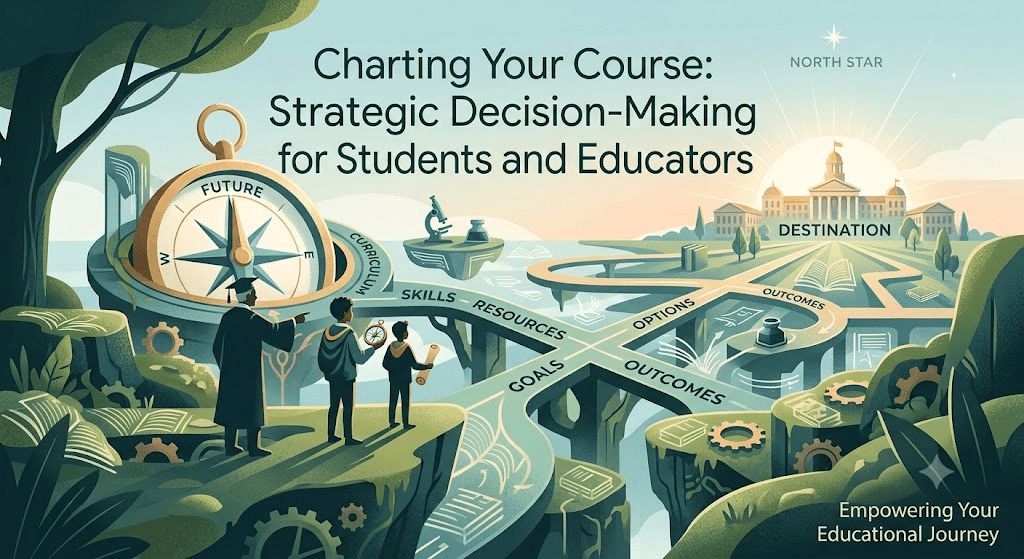
Strategic decision-making is a deliberate process focused on long-term goals and proactive planning. For students, it’s about choosing courses, extracurriculars, or career paths. For educators, it’s about designing curriculum, adopting new technologies, or pursuing professional development. The goal is to move beyond reacting to immediate pressures and start intentionally shaping the future.
Key Steps for Strategic Planning in Education
- Define Your ‘North Star’ (Educational Mission): Before making decisions, you need to know where you want to go. What is your ultimate educational or career goal? This ‘North Star’—whether it’s earning a specific degree, mastering a skill, or fostering critical thinking in students—acts as your constant reference point, guiding you through difficult choices and competing priorities.
- Assess Your Resources (Strengths and Gaps): Take an honest look at your current capabilities. For a student, this means understanding your strengths, weaknesses, learning style, and available support systems (like advisors or mentors). For an educator, this involves evaluating your expertise, available technology, and classroom resources. This self-assessment helps ground your strategies in reality.
- Explore Different Paths (Scenario Planning): Don’t just settle for one linear plan. Brainstorm alternative scenarios and explore ‘what-ifs.’ What if your preferred major doesn’t work out? What if a new teaching method isn’t effective? Practicing flexibility and having backup options is a crucial part of being strategic in a dynamic environment.
- Make an Informed Choice (Research and Evidence): Gather information before committing. Collect data on career outlooks, talk to professionals, or explore research on new pedagogical approaches. For students, this means actively seeking mentorship. For educators, this means looking for evidence-based practices. The more information you have, the better equipped you will be to make a sound, defensible choice.
Empowering Your Journey
Strategic decision-making is a vital 21st-century skill that empowers both students and educators to meet the challenges of an ever-changing future. By investing in this deliberate planning process, you can move away from feelings of uncertainty and forward with purpose, clarity, and the confidence to seize the opportunities that arise.


Leave a Reply