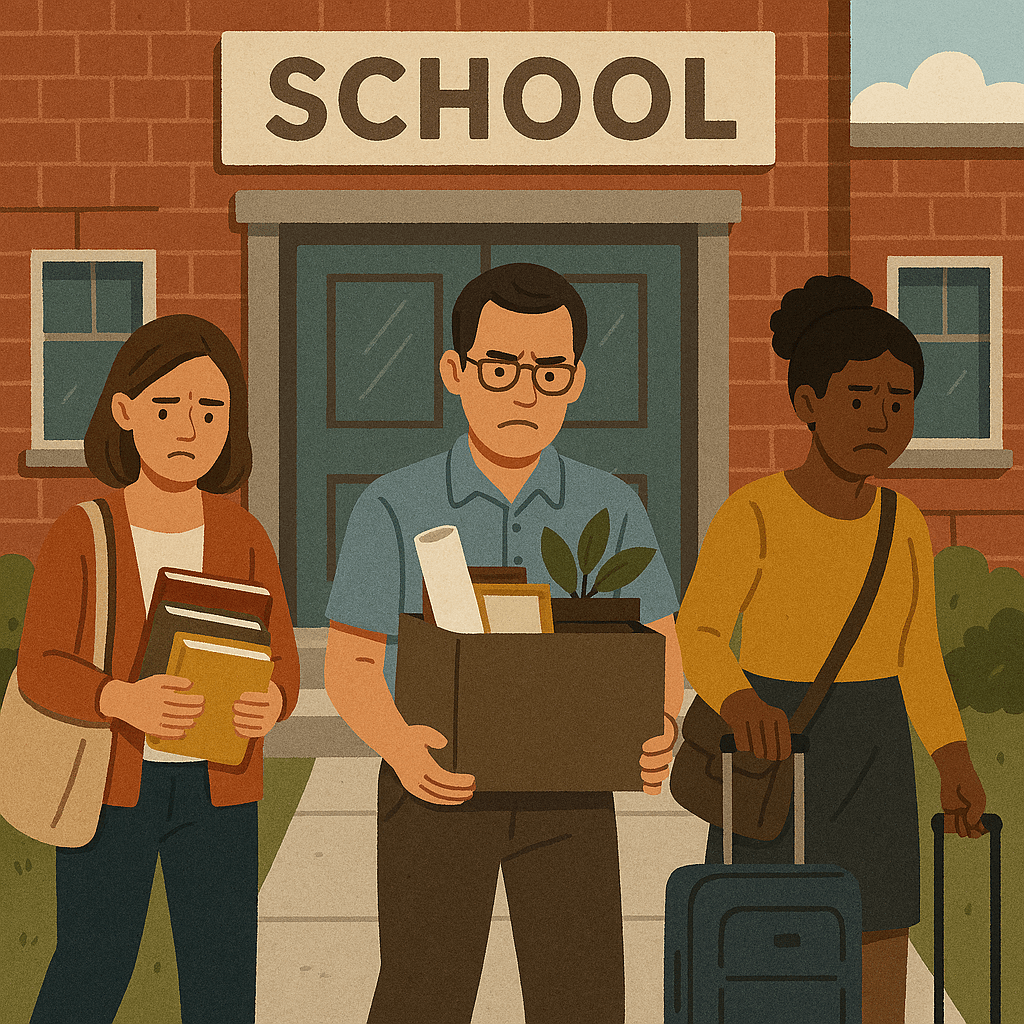
The 2025–2026 school year has revealed a crisis that can no longer be ignored: teachers are leaving the profession in record numbers.
In Arizona alone, over 1,000 teachers have quit during this school year, many resigning mid-year. While Arizona’s situation is alarming, it reflects a much larger national trend. Across the United States, schools are struggling to retain educators, leaving classrooms understaffed and students without consistent instruction.
The Numbers Behind the Crisis
- Arizona has seen more than 1,000 teacher resignations since the start of the 2025–2026 school year
- Thousands of teaching positions remain unfilled or are covered by long-term substitutes
- Nationwide, many districts report ongoing shortages in special education, math, science, and elementary grades
Why Teachers Are Leaving
1. Low Pay That Doesn’t Match the Work
Despite rising costs of living, teacher salaries in many states — including Arizona — remain below national averages. Many educators work second jobs just to cover basic expenses. For a profession that requires advanced degrees, certifications, and emotional labor, the compensation often feels unsustainable.
2. Burnout and Overwhelming Workloads
Teachers are expected to do far more than teach. They manage student behavior, provide emotional support, complete extensive paperwork, attend unpaid meetings, and respond to increasing demands — all while being held accountable for outcomes beyond their control. The result is chronic burnout.
3. Lack of Administrative and Behavioral Support
One of the most cited reasons teachers leave is lack of support with student discipline. Many educators feel isolated when dealing with disruptive behaviors, with little backup from administration. Over time, this erodes morale and safety in the classroom.
4. Growing Pressure and Public Scrutiny
Teachers face intense scrutiny from policies, politics, and public criticism. Curriculum debates, testing mandates, and constant changes in expectations have left many educators feeling undervalued and unheard.
5. Poor Work-Life Balance
Long hours, limited planning time, and insufficient mental health support make it difficult for teachers to maintain a healthy balance. For many, the emotional toll eventually outweighs their passion for teaching.his is no longer a temporary staffing issue — it’s a systemic problem.
Why This Matters
When teachers leave:
- Students lose consistency and strong relationships
- Remaining teachers absorb larger workloads, accelerating burnout
- Districts rely more heavily on substitutes and underqualified staff
The teacher shortage doesn’t just impact schools — it impacts entire communities.
The Bottom Line
Most teachers are not leaving because they don’t care — they’re leaving because the system has become unsustainable.
Until meaningful changes are made around pay, support, respect, and working conditions, states like Arizona — and the nation as a whole — will continue to see educators walk away from a profession they once loved.
The question is no longer why teachers are quitting.
The real question is: how long can schools function if this continues? Is this phenomenon just an American problem?

Leave a comment